
Many of history’s most celebrated creative figures are autistic or have discussed traits associated with the autism spectrum. From Temple Grandin’s groundbreaking animal science work to Tim Burton’s visionary films, autistic creators have shaped art, music, and culture in ways that continue to resonate around the world.


 Think about some of the most inventive, rule-breaking, boundary-pushing creative works of the last few decades. The films of Tim Burton. The jazz virtuosity of Matt Savage. Dan Aykroyd’s wildly original comedy writing. What do they have in common?
Each of these creators is autistic or has discussed traits associated with the autism spectrum. And according to many researchers and the artists themselves, their neurological differences didn’t hold them back. In many cases, those same traits contributed directly to their extraordinary creative output.
Here’s a look at five influential autistic creators whose work has left a lasting mark.
1. Temple Grandin
You’ve probably heard of Dr. Temple Grandin. Over the past few decades, she’s become one of the most recognized voices in both autism advocacy and animal science, and for good reason.
Grandin is a professor, author, and animal behavior consultant whose ideas have changed how livestock facilities are designed and managed worldwide. She’s written extensively about her own experience as an autistic person, including “The Autistic Brain: Thinking Across the Spectrum” (co-authored with science writer Richard Panek), and delivered a TED Talk that’s been viewed millions of times. Claire Danes portrayed her in an award-winning 2010 biopic about her life.
Grandin didn’t speak until age three and a half and went through speech therapy before entering mainstream education at age five. What makes her perspective so valuable is its rarity: she offers a first-person account of what it’s like to think differently, and she’s spent decades translating that experience into practical insight.
She describes autistic people as having “differently-abled brains,” and she’s a consistent advocate for educational approaches that recognize those differences rather than flatten them. She’s said plainly that even if a cure for autism existed, she wouldn’t take it.
2. Tim Burton
Tim Burton’s films occupy a world entirely their own. From Beetlejuice to Edward Scissorhands to The Nightmare Before Christmas, his work blends darkness and whimsy in a way that’s been captivating audiences since the 1980s.
Burton has discussed traits associated with the autism spectrum. He wasn’t identified as a child, and those who knew him growing up described him as introverted and solitary. He gravitated toward painting, drawing, and watching films, spending long stretches alone with his creative interests. It wasn’t until his partner, Helena Bonham Carter, was researching autism for an acting role that she recognized some of those same traits in Burton. As part of that research, they watched a documentary together, and Burton said that’s how he felt as a child.
Burton has won the Daytime Emmy Award for Outstanding Children’s Animated Program and the National Board of Review Award for Best Director. His films have a singular quality that’s hard to categorize and impossible to replicate. That outsider perspective, shaped in no small part by how he experienced the world growing up, is exactly what makes them so enduring.
3. Matt Savage
Jazz fans know the name, Matt Savage. At just 13 years old, he was being compared to all-time greats for his virtuoso piano playing. That kind of skill doesn’t arrive overnight, and Savage’s path to it is a remarkable story.
He was diagnosed at age three with what was then called pervasive developmental disorder, a diagnosis now incorporated into the broader autism spectrum classification under DSM-5. As a toddler, music generally distressed him. His mother did play piano at home, but the sensory input was often overwhelming rather than soothing, and he frequently reacted by trying to stop her.
Savage later pursued therapies aimed at reducing sensory sensitivity. Once he’d worked through that process, he began studying piano in earnest, eventually sneaking onto a live band’s stage at a craft fair to improvise on their keyboard. By age 9, he was being featured in national media and releasing his first trio album. By 10, he’d performed at the Kennedy Center and appeared on NPR. By 2005, he was touring internationally.
His story is a good reminder that the path to extraordinary ability isn’t always a straight line. The same sensory sensitivity that made music so difficult for him early on became part of what made him a remarkable listener and performer.
4. Dan Aykroyd
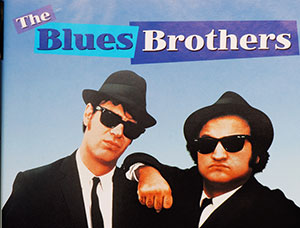
Dan Aykroyd is one of the most inventive comedy writers of his generation. He was a founding cast member of Saturday Night Live before writing the screenplays for Ghostbusters and The Blues Brothers, two films that became cultural touchstones. The Blues Brothers script alone brought together Aretha Franklin, Ray Charles, Cab Calloway, Carrie Fisher, and John Belushi in a single film. That’s not normal creative thinking.
Aykroyd was diagnosed with Tourette syndrome at age 12 and, by 14, had developed strategies for managing his symptoms with therapeutic support. He has also spoken about having traits consistent with what was previously called Asperger’s syndrome, now understood as part of the autism spectrum. In a 2015 interview, he described this as a self-identified observation rather than a formal diagnosis.
He has spoken about various strategies he uses to manage sensory and social challenges. And he’s been candid about the role his neurology played in shaping his creative process, particularly his intense, encyclopedic focus on topics that captured his interest.
That focus, that ability to go deep rather than wide, is a quality that runs through his best work.
5. James Durbin
James Durbin finished fourth on American Idol Season 10 with a rock vocal style that stood out immediately. What made his story compelling beyond the performances was how openly he spoke about having Asperger’s syndrome and Tourette’s syndrome while competing on one of the most-watched television shows in the country. Asperger’s syndrome has since been folded into the broader autism spectrum disorder classification under DSM-5, and Durbin has in later years described himself in those broader terms as well.
Durbin has said that music has always been his most natural form of communication. The intense focus and pattern recognition that often accompany autism contributed directly to his ability to absorb and recreate the rock and metal influences that defined his sound.
He’s continued performing and recording since Idol, and he’s remained a visible advocate for autism awareness. His willingness to be open about his diagnosis at a time when that wasn’t common, on a platform that large, mattered to a lot of people.
What These Influential Creators Have in Common
It’s worth stepping back and noticing a thread that runs through all five of these stories.
None of them succeeded despite being autistic. In each case, the traits associated with their neurology, the deep focus, the pattern recognition, the sensory sensitivity, and the capacity for solitary creative work were part of what made their contributions possible.
That doesn’t mean autism makes success inevitable, or that every autistic person will find their path easily. Temple Grandin’s own writing makes clear that the journey requires real support: the right educational environment, access to therapies that fit the individual, and people who recognize ability rather than only seeing deficits.
ABA therapy is one evidence-based approach used to support communication, daily living skills, and independence for many autistic individuals. The research behind it is extensive, and its application continues to evolve as our understanding of the autism spectrum deepens. If you’re considering a career in this field, you can explore top ABA master’s programs to find the right fit. If you’re curious about how autism relates to intelligence and cognitive strengths, that’s a question researchers have been exploring in depth.
Frequently Asked Questions
Are there many famous autistic people in the arts and sciences?
Yes. Many well-known figures in film, music, science, and other creative fields are autistic or have discussed traits associated with the autism spectrum. Temple Grandin, Matt Savage, and James Durbin are among those who have publicly identified as autistic. It’s worth noting that retrospective or self-identified associations with autism should always be understood as speculative rather than definitive. For more profiles, our guide to acclaimed visual artists with autism covers another side of this conversation.
How does autism relate to creativity and exceptional ability?
Research suggests that traits common in some autistic individuals, including intense focus on areas of interest, strong pattern recognition, and a tendency toward unconventional thinking, can contribute to exceptional creative or technical ability. That said, autism is a broad spectrum, and these traits don’t apply to every autistic person in the same way.
What is the difference between Asperger’s syndrome and autism?
Asperger’s syndrome was a separate diagnosis under earlier versions of the DSM. Since DSM-5 was published in 2013, it has been incorporated into the broader autism spectrum disorder category. People previously diagnosed with Asperger’s are now considered to be on the autism spectrum, typically without significant language or intellectual delays. Several of the figures in this article, including James Durbin and Dan Aykroyd, have used Asperger’s terminology in public statements predating or independent of DSM-5.
What is ABA therapy, and how does it support autistic people?
Applied behavior analysis (ABA) is a therapy approach grounded in the science of learning and behavior. It’s one of the most extensively researched approaches for supporting autistic individuals, with applications ranging from building communication and social skills to developing daily living and independence skills. When delivered well, ABA therapy is individualized and strength-based. You can explore how musicians on the autism spectrum have navigated their paths for more perspectives on autistic creativity and support.
Can autistic people succeed in creative careers?
Absolutely. The individuals profiled here are among many examples. Success in creative fields often rewards deep focus, original thinking, and willingness to work outside conventional frameworks, qualities that many autistic people bring naturally. Access to the right support, especially early on, can make a significant difference in building the skills and confidence needed to thrive.
Key Takeaways
- Temple Grandin, Tim Burton, Matt Savage, Dan Aykroyd, and James Durbin are among the most recognized autistic or autism-associated creative figures in contemporary culture. Durbin identified as having Asperger’s syndrome during his time on American Idol, a diagnosis now classified under autism spectrum disorder per DSM-5.
- In each case, traits linked to their neurology contributed to their creative strengths, not simply in spite of autism, but in many ways because of how they experienced and processed the world.
- Self-identified or retrospective associations with autism are speculative. Tim Burton and Dan Aykroyd have discussed relevant traits without formal public confirmation of a diagnosis. Matt Savage’s childhood diagnosis used terminology now updated under DSM-5.
- Autistic individuals benefit from educational environments and therapeutic approaches that recognize and build on individual strengths.
- The autism spectrum is broad. These five stories represent a small slice of the diverse range of experiences, abilities, and challenges that autistic people navigate.
Want to learn more about how ABA therapy supports autistic individuals of all ages and ability levels?